Does Insurance Cover Mold in Florida?
Coverage depends on your policy and what caused the mold. This guide explains common scenarios and what documentation may help when mold is tied to water damage.
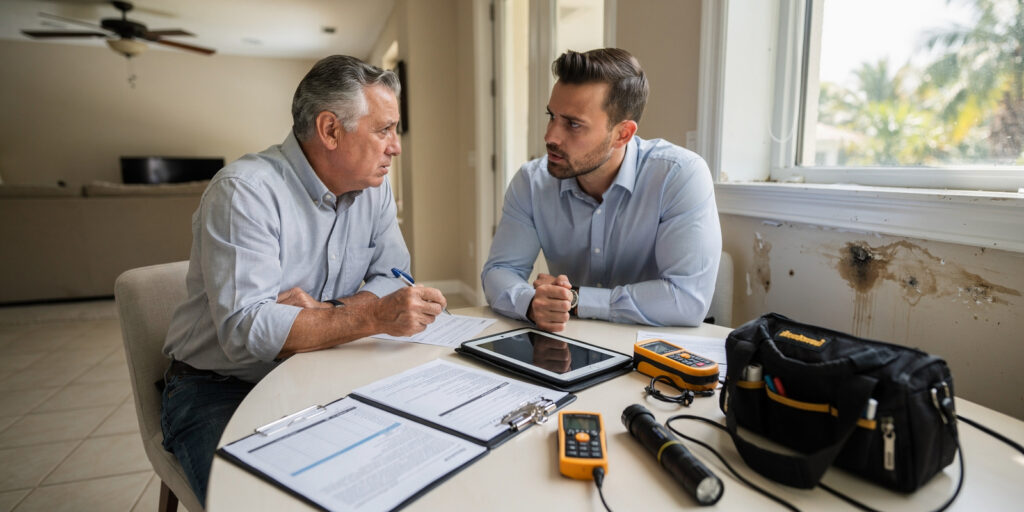
When Mold Is More Likely to Be Covered
Many homeowners ask about coverage after a leak, appliance failure, or storm-related water damage. Policies vary, so it’s important to review your coverage and talk to your insurer.
- Sudden water damage: A burst pipe or unexpected leak may be treated differently than long-term moisture.
- Storm-related water intrusion: Some claims involve wind-driven rain or roof damage leading to moisture and mold.
- Immediate mitigation: Quick drying and documentation can matter when mold follows water damage.
When Mold Is Less Likely to Be Covered
- Long-term leaks: Ongoing moisture issues may be considered maintenance-related.
- High humidity: Mold from chronic humidity/ventilation problems may not be covered.
- Pre-existing damage: Mold present before the policy event can be a challenge.
If you’re not sure what caused the issue, start with evaluation: Mold Inspection & Testing.
What to Document
- Date you first noticed water damage or mold
- Photos/videos of affected areas
- Any repairs or mitigation already performed
- Notes on odors, staining, or visible growth
- Receipts (if you paid for emergency drying/cleanup)
For water-related situations, see: Water Damage & Mold Remediation in Florida.
Need Help With Mold After Water Damage?
Call now to get connected with licensed Florida professionals who can assess the situation and explain next steps.
Disclaimer: This page is general information and not insurance or legal advice. Policy terms vary. This website is a referral service connecting consumers with independent, licensed professionals.